Interview: LUMP
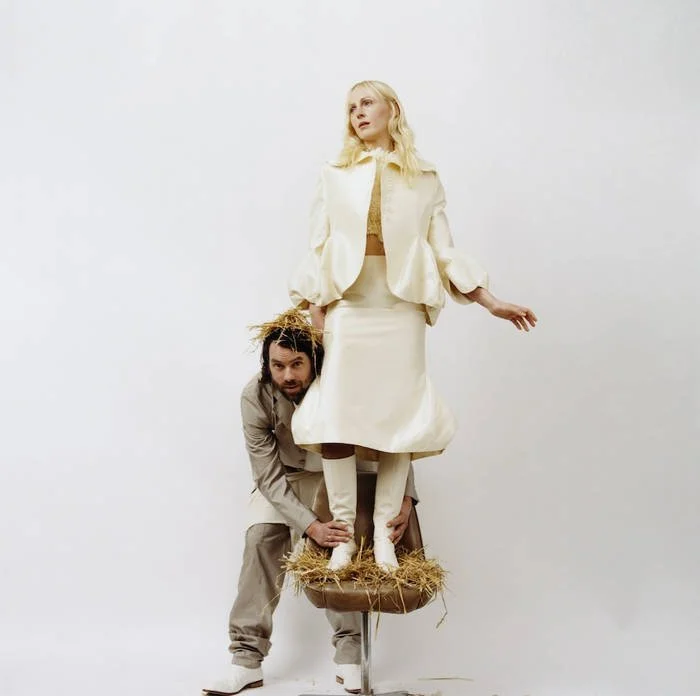
LUMP
Laura Marling and Mike Lindsay’s collaborative project LUMP caught the listener’s attention with their debut record back in 2018. Follow-up ‘Animal’ is even bolder in its aspirations, combining 60s pop with ambient prog rock. We caught up with the pair to discuss what brought them back into the studio, sea-inspired rhythms, and the disappearance of the seven-foot yeti that emblazoned the cover of their self-titled debut
Taken from Issue II - 2021
LUMP’s sophomore album ‘Animal’ starts with the track ‘Bloom At Night’, opening with the sound of synths rising and falling, like waves crashing against the shore. Waves themselves move in cycles of seven, a fact which alongside his new seaside location, inspired Mike Lindsay to utilise an unusual 7/4 time signature for the record “the sea was part of the geography of Margate, where I had moved to only a year before starting to write this stuff, I was going for walks and listening to music and wondered if I could embrace this new maritime life. I had read about waves going in cycles of sevens but then I thought maybe there are other types of waves like radio waves, x rays, gamma rays, ultraviolet rays, so I picked a load of titles that were based on those. So it started from the sea but moved into a kind of spectral space world, which I thought became psychedelic, and for me felt like LUMP’s parallel universe… so I went from the sea to another universe. Then there were some cycles of seven, which were presented as a challenge to Laura”. Whilst most certainly a challenge to completely adapt the way in which you write lyrics, it was seemingly a welcome one for Laura. “Yeah, seven is a challenge. But because it forces you to get out of a quite entrenched internal rhythm that you have, in your mind, which is probably a good thing for lyric writing, it makes you think outside the box a little bit” Marling added.
It’s those sort of unorthodox creative decisions that have made LUMP’s music not just unconventional, but refreshing and captivating to listeners, who have described recent singles ‘Climb Every Wall’ and ‘Animal’ as ‘genius’, ‘gorgeous’, ‘vivid’ and ‘delightfully trippy’. LUMP’s second album was created during a period in which both the pair were working on their own creative outlets. Marling was in the midst of creating her Mercury-nominated seventh studio album ‘Song for Our Daughter’ and likewise Lindsay was working as part of TUNNG on an acclaimed series of projects at the time. I asked the pair if it was hard to switch between the mindset required for the vastly different projects “No, I find it quite a relief actually to have LUMP as a vessel for something completely different. something completely insincere, not in a disparaging way, but it’s a nice clear division. It’s sort of quite appropriate for what type of person I am, I’m quite split in two, so I like it, it works for me” Marling tells me, her sentiments echoed by Lindsay “For me, I’m often in that role in the studio, creating sonic gubbins. But with TUNNG there’s six of us and there’s lots of too-ing and throwing, and filesharing in lockdown world, with this it’s just pure liberation and freedom. So it’s really gratifying to work with just one person with our sort of defined roles kind of thing”.
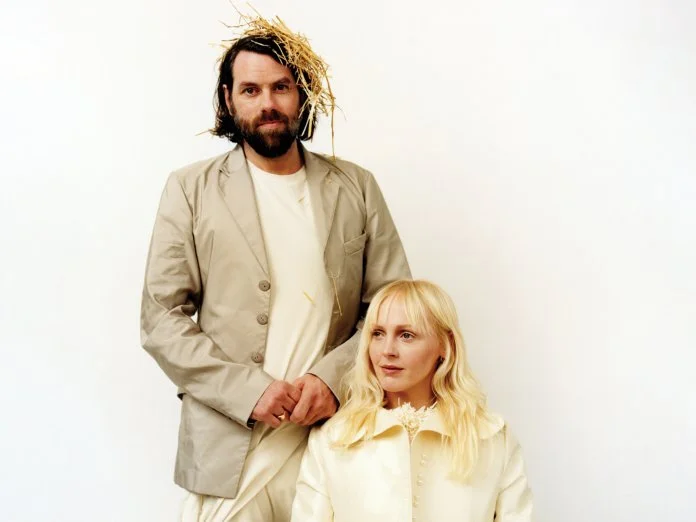
Originally, there was never a spoken intention to return for a second album, though Lindsay says there was “a bit of hope that somewhere lump would come and knock on our little doors”. However, when he’d started compiling a few tracks together, he reached back out to Marling and the pair began work on a follow-up. Both the records have come from the same creative process, Lindsay “collects ideas and creates some sort of sonic wonderworld” to present to Marling who will then as Lindsay says “witness it in the moment, reacting to it and then hopefully, the lyrics come from there”.
When following the same creation process, I asked Lindsay whether perhaps even subconsciously if he found himself producing a certain sound with Marling’s vocals in mind. That it must be hard to recreate spontaneity.“It is spontaneous twice in terms of that particular part of the process because that’s when our two kinds of worlds sort of slot together when I’m presenting the music but you’re right, LUMP did exist and there was a kind of palette, a sort of ulterior universe where the kind of bubbling squelch can go alongside LUMP’s fantasy land, and so it’s quite nice to be able to try and write tunes that are sort of set in another dimension. It is still spontaneous though, I suppose Laura might have had that in mind when she was writing lyrics that it’s for LUMP this time whereas the first time we were just writing songs before LUMP came to be” with Marling adding “Yeah I was thinking of it as the way we did it before, I wanted to keep it as unedited and random as possible, almost even more random I guess I was trying to be this time”.
Despite the randomness within the creation of the record, there’s still a clear cohesive feel from the album’s ten tracks, narrative themes arise and the record seemingly flows the listener along from start to finish “I think anything that’s made in a short period of time has an innate cohesiveness, and also you choose a palette to work with, In that, I was using certain vocabulary from psychoanalysis, which I was just interested in at the time, so it gives it cohesiveness”, Marling describes to me with Lindsay continuing “I tried to find a relative key that every track will be in, so they actually share similar chord progressions, then they can flow into them except for ‘Paradise’, which is a semitone higher than all the others, it’s in a standard C and everything else is kind of like E Flats, C Sharps + Flats and F Sharps, so it’s interesting that you said that and I’m pleased that you said that you found it very cohesive because I felt like at the time paradise kind of took it into a different gear, which it does. But then it kind of settles and switches with that kind of slightly pukey quarter tone back to normal tone into that instrumental”.
Delving into specific songs on the record the aforementioned ‘Paradise’ was in fact a key track I wanted to discuss with the pair, a song I described to them as an intense, psychedelic prog masterpiece, Marling in agreement “I’m so glad you say that... that’s my favorite song and I had to fight for it to be on the record. I’ve been trying to convince everyone that it should have been the first single but no one believed me”. Another standout is the Pink Floyd meets Springsteen ‘We Cannot Resist’ which borders on the line of conventional Pop as Lindsay describes “That was a tricky one, well it was and it wasn’t, we had the chorus for a while, it was actually part of a different tune, and then suddenly it all switched and made sense, Laura came up with the ‘kids on the run’ moment. What’s interesting is it’s almost like a Bruce Springsteen tune or something. It’s kind of a pop track, but it’s very strangely arranged that it doesn’t quite enter into the normal pop world. I love how it enters with whispers and ends with those, the beginning and end parts are like two completely different tunes that are part of the track, it’s a complicated one, it’s going to be a single as well”. Marling sharing those thoughts “I worried that it was too conventional, but it’s not, it hasn’t turned out that way”.
A key moment for the pair on the last record was getting to take the album on tour. On stage, the band grows into a fourpiece, to really flesh out that live sound. With the new record, they’re set to tour the UK this September playing venues such as Patterns in Brighton and Scala in London among others. Lindsay talks me through what attendees can expect come this autumn when the pair return to the stage “I think we both agreed that the shows we did for the last record, we didn’t do very many, but the record kind of took on a life of its own and found a new sound, a sort of level up, more kick, a more sort of meditative kind of shoegaze journey. Quite proggy, I’m just saying lots of different words, but we’re very excited to play it live is what I’m getting at. And we both agreed that what we did as a four-piece might have perhaps suggested certain tracks that we wrote for this record… because imagine playing ‘Paradise’ live. We were writing tracks this time knowing that it probably will be a live show, whereas before we didn’t have that sort of luxury. So we have now started rehearsing again for the tour, I think it’s going to be a very intense, very powerful, and very beautiful experience to come to a LUMP show.”
And finally, fans of the pair are sure to remember the large yeti that emblazoned their debut album cover, appearing in multiple music videos, so will the physical embodiment of LUMP be returning? “they are being prepared for their live debut in August, but there’s also a couple of different iterations of LUMP that are going to be appearing over the next couple of weeks. Two of them are real, you know, like in real life and then one of them is a 3D generated one”. Marling says before the pair pan the camera off to a glimpse of a giant LUMP hiding, how tall is he I ask Marling, wondering how such a figure will get on the stage “I’d say seven and a half feet... He’s bigger than your average human man”. An animal for sure.